

Home » Private: Anti-Racist Parenting » Private: Anti-Racist Parenting Pilot Program » Anti-Racist Parenting Session 3
Anti-Racist Parenting Session 3
Starting Anti-Racist Conversations
Objectives
- Build regular, race-conscious conversations into your daily lives.
- Learn to use various media to start consistent, brave conversations about race and racism.
Weekly Slides
Session 3 Ask-Affirm-Assist Examples
In-Class Activities & Resources
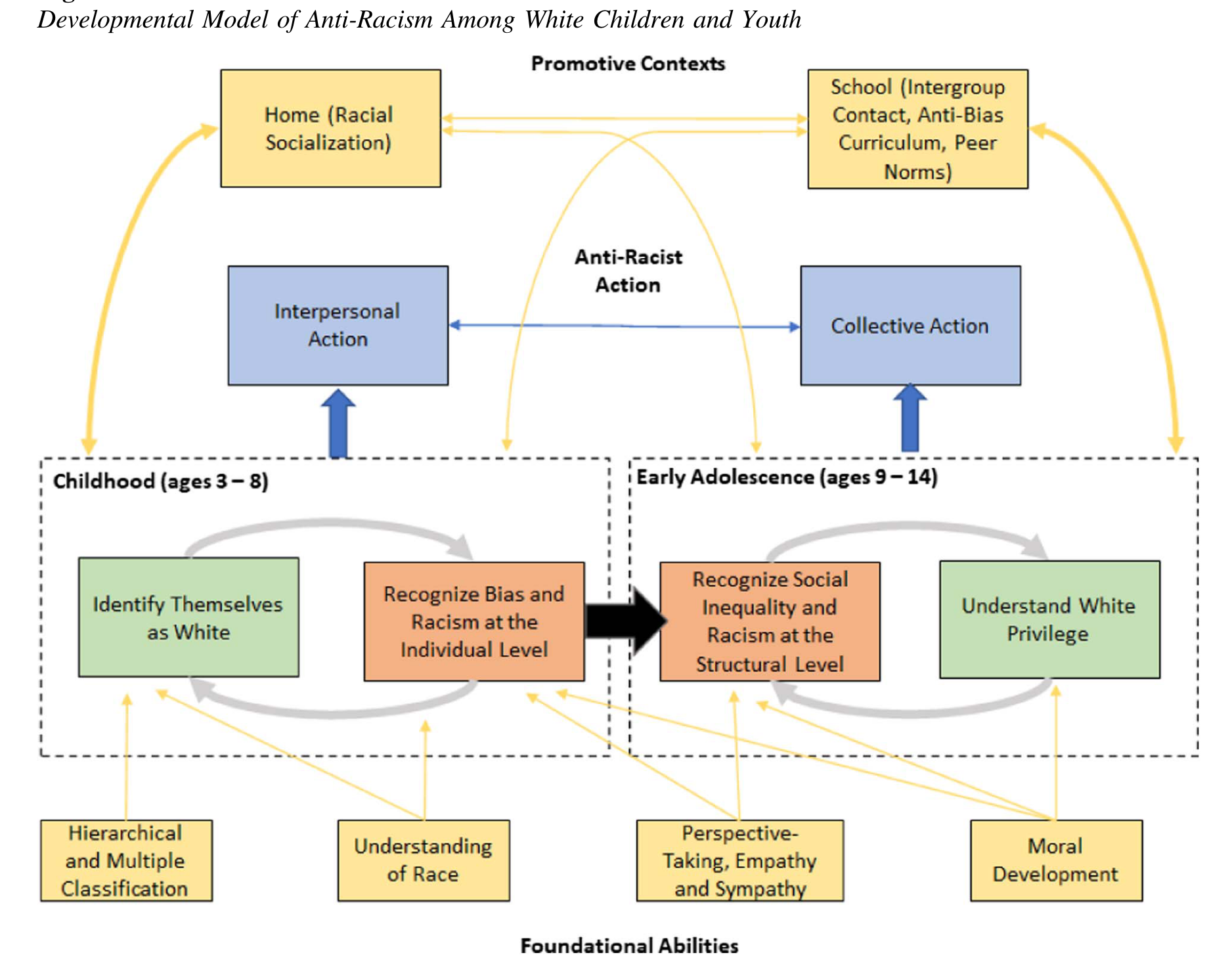
Hazelbaker et al. (2022) – Developmental Model of Anti-Racism
Kid-Friendly Definitions
- Race: A way that some people have tried to group people together based on where their families came from and physical characteristics such as the shade of skin or shape of eyes.
- Racism: When people are treated badly because their families came from a different place or their physical appearance is different.
- Power: When someone has control and they can do anything they want; and they take more things for themselves and other people don’t get as much.
At-Home Practice
Complete an Anti-Racist Activity with Your Child
Read one of the books from the toolkit or select an activity to complete with your child from this page. Use the Ask-Affirm-Assist framework to help you facilitate a conversation.
- Record (audio or video) of you and your child completing the activity.
- Later, relisten or rewatch the recording.
- Write a brief reflection:
- What do you think went well?
- What strategies were helpful in having this conversation with your child?
- Where could you have been more explicit in your conversation about race with your child?
Submit your audio or video file and reflection in your Google Drive folder.
Dive Deeper Resources
Mirrors, Windows, and Sliding Glass Doors (video)
The Real Reason We Need Diverse Books (video)
Choosing picture books featuring diverse, BIPOC characters
Sesame Street “Talking About Race” Resources